

 Português pt
 Español es
 العربية ar
 বাংলা bn
 Deutsch de
 Filipino fil
 Français fr
 हिन्दी hi
 Bahasa Indonesia id
 Italiano it
 Русский ru
 Svenska sv
 ไทย th
 Türkçe tr
 Tiếng Việt vi
 简体中文 zh
Trading Tools: How to Choose the Right Ones
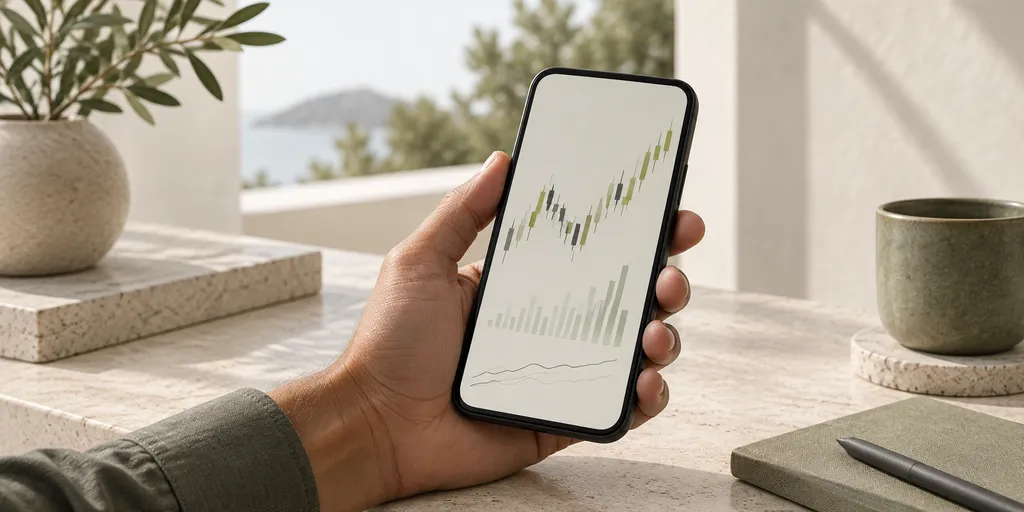
It's easy to confuse a tool with a strategy. Having access to a nice chart, a complete economic calendar, and a risk calculator doesn't guarantee profit — but the absence of these tools almost always gets in the way, because decisions made without organized information tend to be impulsive decisions.
This article lists the tools that actually make a difference in a trader's daily routine, explains what to look at in each one when choosing, and shows how to put together a simple set, without wasting time on features you won't use.
Charting platform
This is the central tool: where you track the price, apply indicators, and execute orders. Before choosing one, check whether it offers the timeframes you use (from intraday to daily), whether it lets you save already configured indicator templates, and whether order execution is fast enough for your trading style. A platform freezing at the moment of confirming an entry can cost more than any analysis mistake.
Economic calendar
This gathers the release times for data like inflation, interest rate decisions, and employment reports, which tend to generate volatility spikes outside the chart's usual technical pattern. A good calendar lets you filter by country and by expected impact level, which helps avoid keeping trades open right at the moment of an announcement that could move the price abruptly and unpredictably.
Position size calculator
This is the tool most underrated by beginners. It converts the risk you accept losing per trade (for example, 1% of a R$ 5,000.00 account, or R$ 50.00) into the correct number of contracts, lots, or shares to buy, considering the distance to the stop loss. Practical example: with R$ 50.00 of risk and a stop loss 25 points away on the chosen asset, the position size should be calculated so that, if the stop is hit, the loss lands right around that R$ 50.00 — no more, no less.
Trading journal
A simple record with date, asset, reason for entry, position size, result, and a note on what worked or didn't. Without this history, it's common to repeat the same mistake several times without noticing, because memory tends to remember gains better than losses. Reviewing the journal every week or month helps identify patterns, like a time of day when results are consistently worse.
Demo account
Before applying any new strategy with real money, testing it on a demo account lets you make mistakes at no financial cost. The caveat is psychological: trading on a demo account doesn't reproduce the emotional impact of risking real money, so it's useful for validating the strategy's logic, not for simulating the full trading experience.
Costs and execution conditions
Not every tool shows up as a separate app — the cost conditions built into the platform itself are also part of the toolset that affects the result. Spread, per-trade fees, and execution speed during high-volatility moments directly influence how much is left from each winning trade and how much each loss actually costs. Before deciding where to trade, it's worth comparing these conditions across more than one platform, always reading the published terms, instead of assuming they all work the same way.
How to choose among so many options
- Prioritize tools you'll use every day, not features that seem interesting but rarely enter your routine.
- Check whether the platform has enough chart history for the indicators you apply, especially long averages.
- Prefer integrated tools: switching between five different apps for each step of the analysis increases the chance of error and delay when it's time to act.
- Be suspicious of any tool sold with promises of guaranteed signals or assured returns — no calculator or indicator eliminates the risk of loss.
Building your basic toolset
To get started, you don't need ten tools: a reliable charting platform, like the one offered by Astron, a free economic calendar, a simple position-size calculator (even a spreadsheet of your own), and a notebook or file for your trading journal already cover the essentials. As your strategy matures, you'll naturally notice which additional tools actually make a difference in your process, instead of adding features just because other traders use them.
Practice before you risk. Open your Astron account and test your ideas on the demo account with R$ 10,000 in virtual funds.
Create free account