

 Português pt
 Español es
 العربية ar
 বাংলা bn
 Deutsch de
 Filipino fil
 Français fr
 हिन्दी hi
 Bahasa Indonesia id
 Italiano it
 Русский ru
 Svenska sv
 ไทย th
 Türkçe tr
 Tiếng Việt vi
 简体中文 zh
Vertiv (VRT): The Stock Behind AI Infrastructure
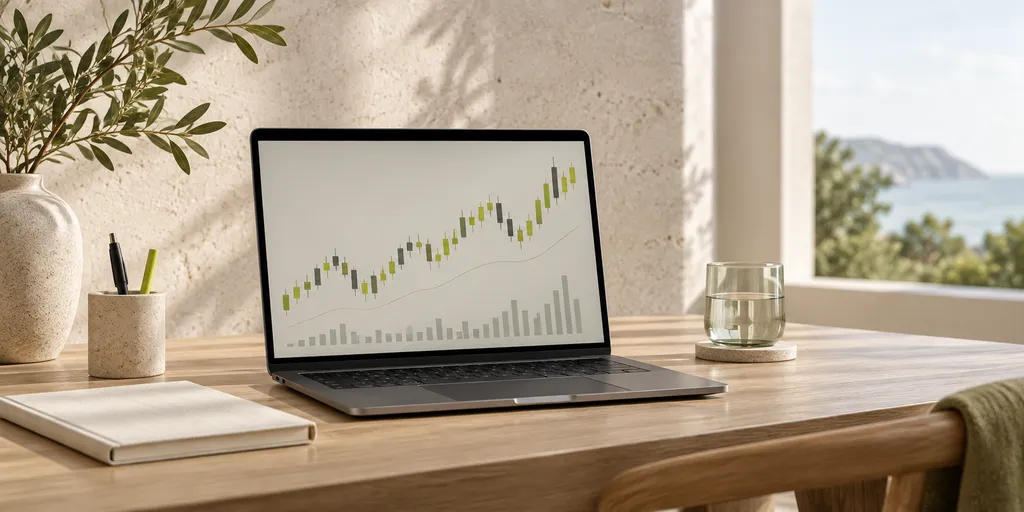
When the topic is artificial intelligence, attention usually goes straight to whoever makes the chips. But there's a group of companies that makes money from a more tedious and less glamorous problem: how to keep a data center full of powerful processors running, cooled, and online without interruption. Vertiv (ticker VRT, on the US stock exchange) is one of the leading suppliers of this type of infrastructure, which is why the stock became one of the most discussed among those following the technology sector in 2026.
This piece explains what the company does, which numbers support the recent rally, and which risks deserve attention. The data cited here reflects information published about the company in mid-2026 and may be outdated by the time you read this article. Nothing here should be interpreted as a recommendation to buy or sell.
What Vertiv does inside an AI data center
Vertiv doesn't make processors or assemble servers. Its business is the physical layer that supports that equipment: power systems, cooling, racks, and monitoring software that prevent failures and overheating. The denser and more powerful a data center built for training AI models gets, the more heat it generates and the more complex the engineering behind climate control becomes.
An important part of the company's business model is acting as a design partner for chip makers and cloud providers, taking part in the design of new data centers even before they're built. This sets it apart from an ordinary supplier, which only comes in once the project has already been defined.
The numbers behind the stock's strength in 2026
According to data released by the company itself and by market sources, Vertiv reported revenue growth of about 27.7% year over year, with an operating margin above 20% and a backlog exceeding $15 billion. The company raised its 2026 sales guidance to a range between $13.5 and $14 billion, up from an annual base of about $10.2 billion. In the first quarter of 2026, operating profit reportedly rose 64%, and free cash flow generation grew even more sharply.
The stock had built up a significant gain for the year by the time this information was published, and the company joined the S&P 500 index in March 2026, which tends to attract automatic flows from funds that track that index.
Three drivers behind VRT's strength
- Demand for liquid cooling: AI-focused data centers generate more heat per square meter than traditional data centers, and Vertiv has been investing in acquisitions aimed at this technology.
- Engineering partnerships: collaborating with major chip makers to design power and cooling systems alongside new generations of servers creates a relationship that's harder to replace than a simple equipment sale.
- Entry into benchmark indices: inclusion in the S&P 500 increases the company's visibility among institutional investors and can support ongoing demand for the stock.
The risks weighing on Vertiv
The first risk is execution. Turning a billion-dollar backlog into actual revenue requires scaling up production, controlling costs, and delivering complex projects on time. Any problem in the supply chain for specialized components can delay deliveries and pressure margins.
The second risk is tied to dependence on major cloud and AI customers. If these giants cut back investment in new data centers, whether for macroeconomic reasons or because they've built too much capacity, Vertiv's future orders could slow down. Some customers might also choose to develop cooling solutions in-house.
Finally, there's valuation risk. A stock that rises sharply and starts trading at high earnings multiples already has a lot of optimism baked into the price. If future results come in below expectations, even a small disappointment can trigger a sharp reaction in the stock, precisely because the market has already priced in a very favorable scenario.
How to look at Vertiv without getting swept up in the enthusiasm
Companies tied to AI infrastructure are often presented as obvious bets on the sector's growth, but that doesn't eliminate execution risk or the risk of the technology investment cycle. Before drawing any conclusions about Vertiv or any other stock in the sector, it's worth watching the upcoming quarterly results, checking whether the backlog is really turning into revenue, and comparing the current price against the fundamentals the company has disclosed, not just against the enthusiasm of the moment. Investing in stocks carries a risk of capital loss, and past performance doesn't guarantee future results.
Practice before you risk. Open your Astron account and test your ideas on the demo account with R$ 10,000 in virtual funds.
Create free account