
 Português pt
 Español es
 العربية ar
 বাংলা bn
 Deutsch de
 Filipino fil
 Français fr
 हिन्दी hi
 Bahasa Indonesia id
 Italiano it
 Русский ru
 Svenska sv
 ไทย th
 Türkçe tr
 Tiếng Việt vi
 简体中文 zh
Does the World Cup Affect Trading? What Really Changes
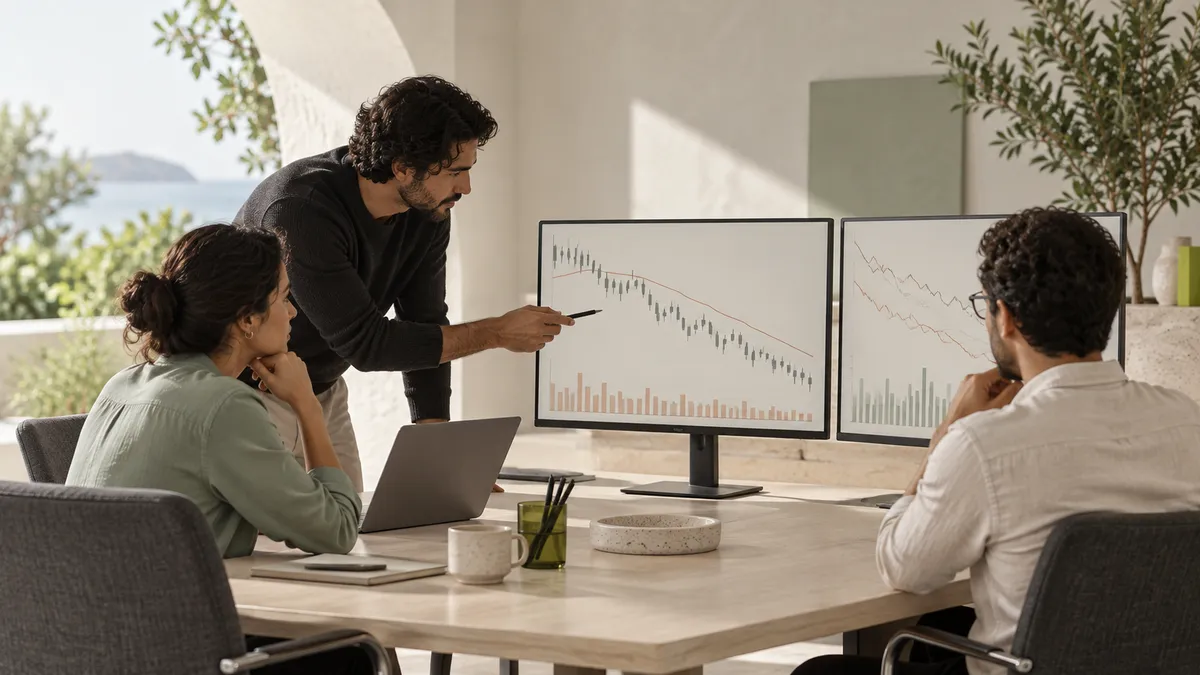
Financial markets don't trade soccer match results. They trade expectations. That's the first thing to remember whenever someone asks if the World Cup can move currencies, stocks, or commodities. The answer is yes, but almost always through indirect paths: investor attention, market liquidity, collective mood, exposure of specific companies, travel demand, advertising spending, and short-term risk appetite.
The common mistake is turning this into a simple rule, like "the host country's currency rises" or "the sponsor's stock rises." In practice, the useful question is narrower: which specific asset is affected, what exactly changes in it, and can that change be seen in price, volume, or analyst expectations?
From fact to price: the path that needs to exist
Before treating a soccer headline as market news, it's worth tracing the path between the two. If that path is weak or nonexistent, the trade idea is probably weak too, no matter how interesting the story sounds.
- The country's national team plays during trading hours — local traders' attention drops, volume can shrink, and the spread on some assets can temporarily widen.
- A favorite team loses in a knockout stage — local mood can weaken for a short period, but that only counts as a market factor if it's confirmed in the local index's price or in consumer-sensitive stocks on the following session.
- Host cities receive a large flow of tourists — hotels, airlines, restaurants, and payment providers can benefit, and that becomes relevant to the market when it shows up in quarterly earnings or in analysts' forecast revisions.
- A sponsoring brand gets extra visibility — this only affects the stock price if the company updates its sales projections or if analysts revise estimates because of it.
Practical rule: if the story doesn't change expectations, liquidity, or investor positioning, it probably shouldn't change your trading plan.
The most real effect: a drop in attention, not a direct price move
The most consistent and most studied effect of major sporting events isn't a goal moving the market — it's the public no longer paying attention to it. During important matches, especially when the home country's team is playing, a meaningful share of local traders and investors focus on the game instead of watching the order book.
That may seem minor, but in short-term trading it can matter a lot: less attention tends to mean thinner volume, wider spreads on some instruments, slower reaction to news, and price moves that correct themselves once normal market participation returns. An academic study that analyzed the 2010 and 2014 World Cups, published in the Journal of Money, Credit and Banking, found evidence of investor inattention during national team matches, with traded volume drops that reached 48% at some points.
How to apply this without overdoing it
For short-term traders, this information is more practical than trying to predict who will win a match. If the local market usually trades during the hours of a decisive match for the national team, it's worth expecting worse execution behavior: choppier candles, weaker follow-through on moves, and less friendly spreads. That's an operational warning — it isn't, by itself, an entry or exit signal.
Likewise, a headline about sponsorship, tourism, or consumption related to the event should only become a trading consideration when it's reflected in something concrete: travel booking data above expectations, an earnings comment citing the event, or an analyst forecast revision. Without that confirmation, the headline is just context — it isn't, on its own, a trading thesis.
What it comes down to
Events like the World Cup remain, above all, market context, not an isolated trading signal. They help explain why certain assets get temporary attention, why a local market's liquidity can get thinner during certain hours, or why a specific sector shows up more often on watchlists. They don't replace the chart, the economic calendar, risk management, or common sense — macroeconomic factors like interest rates, inflation, and employment data remain, most of the time, the real drivers of the market, even during a World Cup month. Any trade based on this kind of event remains subject to the same risk of loss as any other, and deserves the same planning care before being executed.
Practice before you risk. Open your Astron account and test your ideas on the demo account with R$ 10,000 in virtual funds.
Create free account