

 Português pt
 Español es
 العربية ar
 বাংলা bn
 Deutsch de
 Filipino fil
 Français fr
 हिन्दी hi
 Bahasa Indonesia id
 Italiano it
 Русский ru
 Svenska sv
 ไทย th
 Türkçe tr
 Tiếng Việt vi
 简体中文 zh
What Is After-Hours Trading
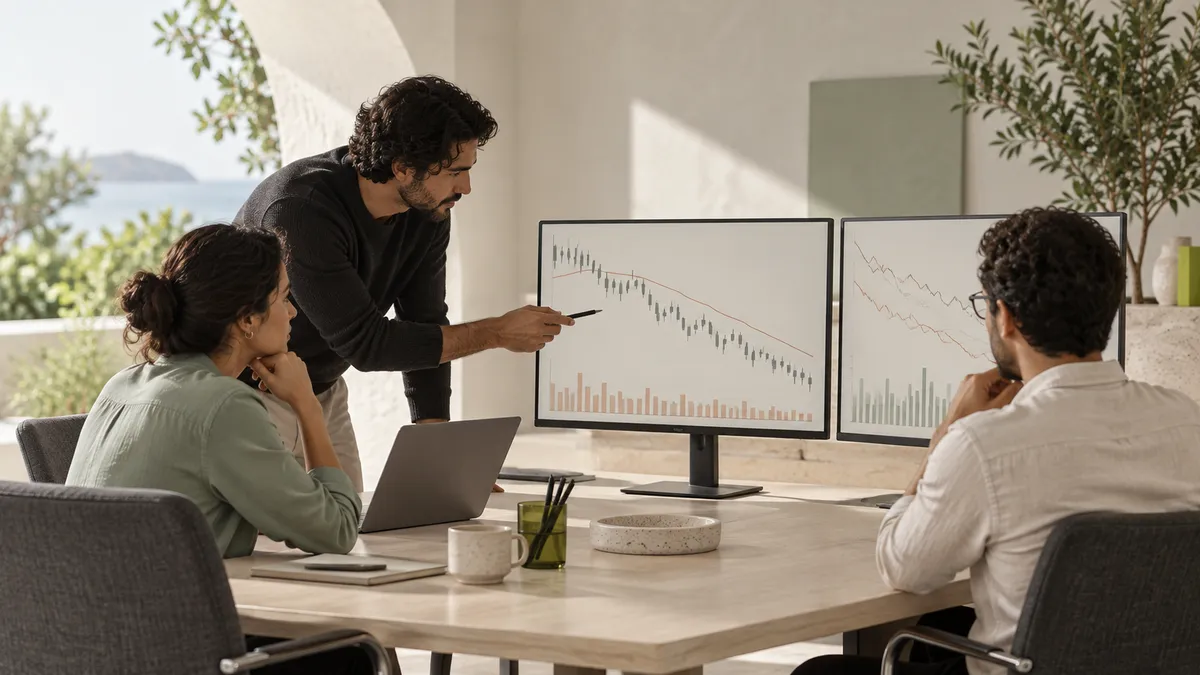
Most stock exchanges have set operating hours, but that doesn't mean all trading stops when the session closes. In several markets there's an additional window, before the open (pre-market) or after the close (after-hours, or post-market), where trades keep happening — just under conditions quite different from regular hours.
Understanding these differences avoids two common traps: overestimating the importance of a price move outside normal hours, and being caught off guard by the lack of liquidity during this period.
Why this window exists
Companies usually release quarterly earnings and relevant news outside regular trading hours, precisely to give the market time to process the information before the session reopens. Extended trading lets investors react to this news without waiting until the next day's official open, though at much lower volume than the main session.
The practical differences of after-hours
- Fewer participants: much of retail and institutional investors don't trade outside regular hours, which significantly reduces trading volume.
- Wider spread: with fewer people buying and selling, the difference between the buy (bid) and sell (ask) price tends to widen, making every trade more expensive.
- More volatility per order: since there's less liquidity, a single sizable order can move the price proportionally more than it would during regular hours.
- Prices that don't always hold: a strong after-hours move, driven by news, can fade or partially reverse once normal volume returns at the next session.
An example of how this plays out
Imagine a company that releases quarterly results above expectations at 6 p.m., an hour after the regular session closed, with the stock having ended the day at R$ 54.00. In after-hours trading, the stock may rise to R$ 58.00 on relatively low volume, reflecting the initial reaction of those who have already processed the news. That doesn't guarantee, however, that the stock will open the next session exactly at that level — the official open, with full volume and participation from all types of investors, is what really establishes the market's consensus price.
Specific risks of trading during this window
The wider spread is the first cost to consider: on a liquid stock, the spread during regular hours might be a few cents, but in after-hours that gap can widen considerably, making both entering and exiting the trade more expensive. Combined with the shallower order book, this makes it harder to execute a large order without impacting the price itself.
There's also the risk of overreaction: the market, with fewer participants assessing the news, can react more extremely than it would with the full regular session's volume. Traders who buy into a strong after-hours move risk seeing that move shrink — or even reverse — once the session reopens with full participation.
When this matters for market watchers
Even those who don't trade directly outside regular hours benefit from watching this period, especially around earnings releases. The direction and intensity of the after-hours move usually serve as an early clue to the market's sentiment about the news, useful for preparing for the next session's open — but without treating that moment's price as final.
Putting this into practice
Trading outside regular hours can make sense in specific situations, but it requires adjusting expectations: market orders tend to be riskier during this period, given the wider spread, and position size should be smaller than what's normally used during the regular session, precisely to offset the lower available liquidity.
It's also worth checking, before any trade during this window, whether the broker or platform used actually offers extended trading access for the asset in question, since this availability varies a lot between markets and instrument types. Without that access, the investor would only be able to react to the news at the next session's open, with the price having already adjusted overnight.
Practice before you risk. Open your Astron account and test your ideas on the demo account with R$ 10,000 in virtual funds.
Create free account