

 Português pt
 Español es
 العربية ar
 বাংলা bn
 Deutsch de
 Filipino fil
 Français fr
 हिन्दी hi
 Bahasa Indonesia id
 Italiano it
 Русский ru
 Svenska sv
 ไทย th
 Türkçe tr
 Tiếng Việt vi
 简体中文 zh
Mega-IPO Season: Are SpaceX, OpenAI, and Anthropic Changing the Market?
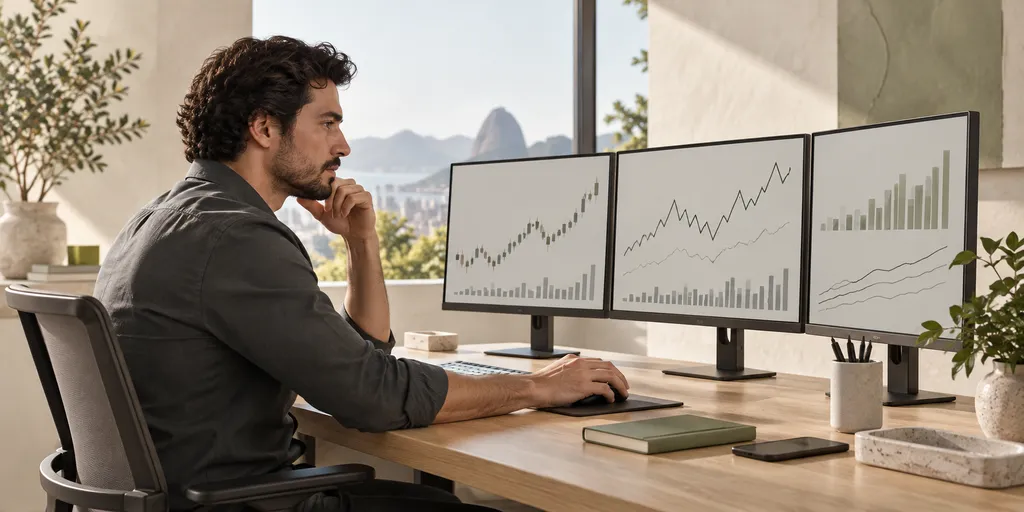
SpaceX's stock market debut wasn't just a large-scale deal — it was treated, at the time, as the start of a mega-IPO season capable of reshaping how the market prices entire sectors tied to space, artificial intelligence, and computing infrastructure. With OpenAI and Anthropic pointed to as the next candidates to follow the same path, the natural question is: does this kind of giant listing actually change how the market works, or is it just another hype cycle around well-known names?
This article organizes the main points discussed at the time about this movement, based on public data available then. Nothing here should be read as investment advice — the goal is to map out the mechanisms through which a crop of IPOs this size can affect the market as a whole.
The pattern SpaceX left on record
SpaceX's offering drew attention for setting aside an unusual share for retail investors — reportedly up to 30% of the total offered —, a level of participation rare in deals of this size. With a valuation approaching $2 trillion, the company entered the market as one of the most valuable companies in the world on day one, attracting demand from investors in the United States, Europe, the UK, and Asia.
The impact of a listing this size isn't limited to the company itself. An offering like this pulls money, attention, and institutional capital toward a single stock, which can influence how investors allocate resources across sectors and even how broad indices move, in case passive funds are required to buy the shares to keep their portfolios correctly composed.
Why a potential OpenAI offering would carry its own weight
An OpenAI listing would potentially be one of the most anticipated in recent history, for representing the first opportunity for everyday investors to directly own a stake in the company associated with the modern AI boom. A public valuation for OpenAI would tend to influence how the market views the entire AI ecosystem — since the company sits at the center of a network that includes chip suppliers, cloud infrastructure providers, software companies, and computing power providers tied to the AI boom.
A point cited at the time by OpenAI's own CEO, Sam Altman, sums up the necessary caution well: an IPO is, in his words, just a financing event. In other words, the eventual market value would depend less on simply going public and more on the company's real ability to sustain the investment pace needed to scale advanced AI systems — a cost that, according to the executive himself, is enormous.
Where Anthropic would fit into this story
Unlike OpenAI, better known for consumer-facing products, Anthropic — the company behind the Claude AI assistant — built much of its business model around corporate clients and large-scale commercial applications, with a reported valuation in the hundreds of billions of dollars. If both companies went public, the market would, for the first time, have a direct comparison between two competing approaches within the same sector: one focused on consumer products, the other focused on enterprise clients. This kind of direct rivalry between two listed giants tends to draw even more investor attention, similar to historic rivalries in other sectors.
What this means for market participants
Regardless of whether these specific offerings play out exactly as described at the time, the mechanism behind the discussion is real and worth understanding: a sequence of giant IPOs concentrated around the same theme — in this case, space and artificial intelligence — tends to pull attention and capital toward that theme as a whole, affecting not just the companies going public, but also suppliers, indirect competitors, and even stocks with nothing to do with the sector, as capital gets redirected.
For anyone following this kind of event, what matters most isn't trying to nail the exact date of a potential offering, but understanding that a "mega-IPO season" tends to increase volatility and news volume around an entire sector, not just the company being listed. That creates both opportunities and risks of trading based on expectation rather than concrete fact.
A necessary caveat
The information cited here reflects discussions and public data from the period when the topic was originally discussed, and a potential OpenAI or Anthropic listing may never happen exactly as described, or may happen under quite different conditions. This article is for educational purposes and doesn't constitute a recommendation to buy or sell any asset — investment decisions should always consider updated data and the fact that trading stocks, especially around IPO expectations, involves real risk of capital loss.
Practice before you risk. Open your Astron account and test your ideas on the demo account with R$ 10,000 in virtual funds.
Create free account