
 Português pt
 Español es
 العربية ar
 বাংলা bn
 Deutsch de
 Filipino fil
 Français fr
 हिन्दी hi
 Bahasa Indonesia id
 Italiano it
 Русский ru
 Svenska sv
 ไทย th
 Türkçe tr
 Tiếng Việt vi
 简体中文 zh
TV Shows and Movies About the Financial Market to Watch
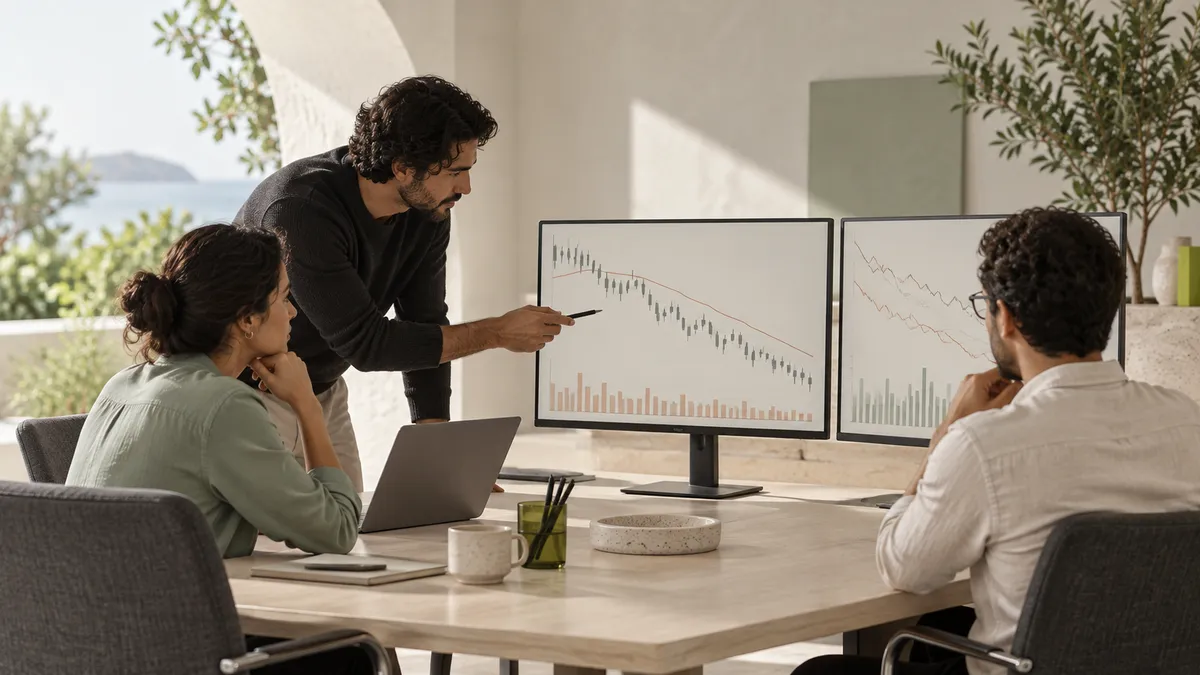
Not all learning about the financial market has to come from spreadsheets and charts. Series and documentaries that portray the daily life of traders, financial crises, and Wall Street culture help you understand the psychology behind investment decisions, even in a dramatized form.
The list below gathers well-known productions that approach the financial market from different angles: fiction, comedy, and reenactments of real events. It's worth remembering this is entertainment, not technical educational material, so it's good to watch with a critical eye, separating what's dramatization from what actually helps you understand how the market behaves.
Productions that portray daily life on Wall Street
Some series focus on the routine of investment banks and the competitive environment among analysts and traders.
- Industry: follows a group of graduates competing for permanent positions at an investment bank in London. It captures well the pressure and competitiveness of starting a career in the financial market.
- Succession: revolves around a dysfunctional family that controls a media conglomerate, with power struggles that frequently run into financial and corporate decisions.
Productions about crises and historical events
Other productions reconstruct moments that marked recent market history, which helps in understanding how bubbles and crises form.
- Black Monday: portrays, in a dramatic comedy tone, the events that led to the 1987 American stock market crash.
- Too Big to Fail: a miniseries based on a book that reconstructs the behind-the-scenes of the 2008 financial crisis, showing decisions made under extreme pressure by regulators and banks.
- The Ascent of Money: a documentary based on a book that traces the history of money, banks, and the financial system across the centuries.
- The Big Short: a film that follows investors who noticed, before most people, the signs that the American housing market was about to collapse in 2008. It's a good reference for understanding how credit bubbles form without most of the market noticing in time.
Analysis programs and reality shows
For those who want to see how real professionals comment on the market day to day, there are news programs and reality shows that follow actual traders.
- Wall Street Warriors: a reality show that shows the behind-the-scenes life of traders, analysts, and brokers in New York.
- Million Dollar Traders: a British reality show in which beginner traders get the chance to trade real money under the supervision of an experienced professional.
- Boom Bust: a financial news program covering global markets, economic trends, and investment strategies.
What to take from these productions, and what not to take too seriously
Series and reality shows tend to dramatize decisions to hold the audience's attention. A fictional trader who bets everything on a single position and comes out on top makes for a great script, but represents exactly the kind of behavior that risk management tries to avoid in real life.
That said, these productions have real value when used with the right filter:
- They help you understand the psychological pressure of trading under uncertainty, even when the plot is exaggerated.
- They show how news, rumors, and central bank decisions affect the market's collective behavior.
- They provide historical context for crises like those of 1987 and 2008, which helps explain why investor protection rules exist today.
The biggest risk of watching this kind of content is confusing television drama with a replicable strategy. Big single wins and risky bets make for good scenes, but in the real world they tend to come with equally big losses. Trading and investing involve risk of loss, and no financial decision should be inspired solely by a memorable scene from a show.
If you enjoy learning while unwinding, it's worth setting aside time to watch one or two of these productions and then going back to more technical study, whether about chart analysis or risk management. Combining historical context with technical knowledge tends to build a more complete view of how the market really works, away from the glamour of the screen.
A good way to get the most out of these productions is to watch with a notebook by your side. Whenever a scene shows an impulsive decision, ask yourself what a risk management plan would have called for instead at that moment. This simple exercise turns entertainment into a starting point for reflecting on your own habits, without requiring any advanced technical knowledge to begin.
Practice before you risk. Open your Astron account and test your ideas on the demo account with R$ 10,000 in virtual funds.
Create free account